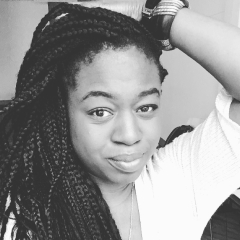
Welcome to my studio

Hello my name is Suritah and my passion is Classical Painting.Welcome to my Studio. Here I will be sharing my journey of creating my “Hero” piece. But first let me tell you about th things I love right now. I love ll things art, mostly classical painting and the clasical painting genre. Under that umbrella, I love Classical, Neo Classism and Academics. Some of my favourite painters are Lawrence Alma Tadema, Jean Auguste Ingres, John Singer Seargent, Santurnino Heran. Charly Palmer, Amrita Sher GIl and someone who was just introduced to me, Yinka Shonibare.

I absolutely love Mythology,  African, Indigenous and Nordic. The Poetic words of Yasunari Kawabata, Langston Hughes, Nizzar Kabbani and Thic Nhat Hanh. I also love all things wellness. Art is my passion, my escape, my way of understanding and often my words. I am happy and excited to share a bit of my world with you.

Love,

Suritah

Heroes, Gods and Giants in Mythology

As I have been creating and thinking about my inner hero, I often find myself imagining the world around her and all the guides who help her on her journey. I see my ancestors as giants—spiritual, mythical figures who each serve a different purpose. They are the ones my warrior within communicates with: the Guardian of Medicine, the Guardian of Journey, the Guardian of Hope, the Art Workers, the Guardian of Tales, the Council of Elders, the Time Keeper, and many others. They all come together to help this one person on her earthly journey, because her journey and her time here are important.

This world of giants and guardians matters deeply to my inner hero because it reminds her that she is never walking alone. Every challenge she faces, every transformation she undergoes, is part of a lineage—guided, witnessed, and strengthened by those who came before her. These beings embody the wisdom, creativity, resilience, and spiritual force that she draws from. They help her remember who she is, where she comes from, and what she is capable of becoming. Their presence turns her personal journey into a sacred one, giving her purpose, grounding, and courage.

I write this post to say that this project does not end here. I plan on continuing it by creating the world that surrounds this Warrior—bringing to life all the Giants who guide her along the way.

In African mythology, the Hero is understood this way: “If characters find God in themselves, heroes bestride Heaven and Earth, assuring that the culture they embody has heavenly sanction. Heroes—successful or not, sublime or not—provide the promise of union with the heavens.” (World Mythology)

In Pueblo tradition, it is Awonawilona—“the one who contains all.” For the Pueblo peoples of what is now Arizona and New Mexico, the stars are personified heroes who hunt across the sky. Thunder, wind, and storm live in human form but can also take the shape of animals.

Te Kahui Tipua are a tribe of giants mentioned in some Māori legends, though their existence is sometimes refuted in order to protect traditional claims to the land.

And in Polynesian mythology, Māui the Land Fisher appears. The god of the sky, Tangaloa, and his children lived in the heavens above the Earth. One of his children, Tangaloa the artisan and God of the Material Arts, was responsible for the creation of many of the Oceanic islands.

These are just some examples of Heroes, Gods and Giants in Mythology that inspire me.

And so, as I continue shaping this world of giants, guardians, and ancient echoes, I also shape the hero within me. Her journey is not simply imagined—it is lived. Every story I uncover, every myth I honor, becomes another thread in the tapestry of her becoming. And with each step she takes, guided by those who walk with her in spirit, I am reminded that creation is both memory and prophecy. The world I am building for her is, in truth, the world that is building me.

Studio Visit # 6 Greyscales have been created

Hello There

Welcome Back to my Studio!

Here in this video. I am working on the #3 Greyscale. I have now created the Greyscale in 1.5, 3, 5, 7 and 9. Why the Greyscale is important?

The greyscale, or Munsell Value scale, is important because it provides an objective, perceptually uniform standard for measuring the lightness or darkness of all colors. It serves as the vertical axis in the three-dimensional Munsell color space, independent of a color’s hue (actual color) and chroma (saturation)

I hope you like my video. see you next time. Whats Next? My Painting

(The music in the background- Oct 33 by Black Pumas)

The Artists that Inspire This Artist

Hey there!

As I move forward in creating my grayscale color palette, I wanted to share some of the artists who inspire me to grow and become better in my own creative process. There are a few images here where I don’t know who the artists are, but I love the subject matter and the techniques used in their work.

About four years ago, I received a scholarship from Workman Arts to study classical painting. I had always wanted to learn classical painting, and it felt like divine timing. When I study these artists—through their sculptures, writings, and brushwork—the first thing I notice is the patience behind their creations, their dedication, and the masterpieces that unfold from that.

I want to master classical drawing and painting. I practice drawing every day. When I went back to school for classical painting, I actually became a bit afraid of color—LOL—because I was learning how to paint from the very beginning. Most of my life, I’ve been self-taught.

Being in this residency has helped me overcome that fear of color and just go for it—after all, I have a painting to finish!

Who are the artists that inspire and motivate you to be better? Maybe there’s a way you can share that with me.

Thank you for visiting me again.

Studio Visit #5 The Color Palettes Ive Chosen

Hello there

Welcome Back!

Thank you for visitng me

This is going to be a short post, as I wanted to share the colors I’ve chosen for my painting. These charts come from the Munsell Color Theory System. During my training at the Atelier, we spent a full day creating twelve color charts. The specific charts I’ve chosen are the Oranges (including browns) for her skin tone, the Blues and Reds for the shawl, and the Yellow Ochre 1.5 and 3 for both her skin tone and shawl.

The Munsell Color System is a standardized method for describing colors based on three properties: hue, value, and chroma. Developed by Albert H. Munsell, this system uses a three-dimensional model to define colors with precision.

First, I’ll need to create the grayscale in order to mix the colors I need. See you soon!

Studio Visit # 4 – She’s a Silent Warrior

It has taken me an incredibly long time to imagine what my inner hero looks like. I had to close my eyes, look within, sit in silence, and take a moment. I’m so used to referencing other images, posts, or stories—but this time, I had to reference myself. That was really hard.

So, I started with research—looking into my favorite flowers, myths, tales, and legends. I also researched women who inspire me, strengthen me, and give me hope.

One of my favorite discoveries was learning the meaning behind my favorite flower, the gladiolus, and about the healing plant Imphepho. I took a few self-portraits and used them as references because I wanted my inner hero to resemble me in some way. I wanted her to resemble my features, my natural hair, my skin tone etc…I imagined her in a warrior stance, holding the healing herb Imphepho, and wearing a shawl adorned with a gladiolus design. Traditional African shawls are deeply meaningful to many African Communities

Traditional African “warrior shawls”—more accurately described as specific tribal garments like for example the Maasai shuka—carry deep cultural significance. They symbolize identity, social status, bravery, protection, and community values.

Protection (Physical and Spiritual): Beyond their practical use for warmth, these shawls are often imbued with spiritual meaning, believed to offer protection against physical harm and evil spirits.
Weaving Cultural Narratives: The patterns, colors, and motifs woven into the fabric tell stories of history, philosophy, ethics, and moral values.

This process was very difficult for me because it’s so easy to focus on the negative things that have happened in my life. But now, I’m choosing to shine a light on the positive. Next, I paint.

Accessibility, Mental Health, Walking as a Black Woman!

Hello Again!

Thank you for visiting me!

Let’s start with this lovely statement that was made to me yesterday by a fellow resident. She said:

“Suritah, it’s like you go into this wormhole to do research and study women from the past.”

It’s almost as if I’m looking to the past to understand the present—and to see how it might shape my future. I love the way Alessia put it. I truly do love researching mythology, legends, tales, and short stories. Within that, I especially love reading about strong women—whether in myth or in history.

In grade school, i my second-grade art teacher told me, “Of course you can live your life as an artist.” In my teens, it was the beautiful Sandra Young, who owned the very first Afrocentric store I ever walked into. She invited me to participate in my very first group art exhibition when I was just 18.

I’ve had chosen aunties, uncles, godparents, big sisters—but nothing stuck, and no one stayed. I’ve had to navigate this journey largely on my own, sometimes making decisions far beyond my years. At times, it’s been incredibly isolating—often lonely.

These feelings have followed me into creative spaces, too. My disability is not visible—I’m losing my hearing—and I’ve been actively working on my mental health. There have been times when I’ve disclosed my mental health challenges, only to be met with mockery, misunderstanding, or outright doubt. These experiences have pushed me into further isolation.

I don’t often speak about my mental health because I don’t know how people will respond. I also don’t want to deal with the stereotypes or the backlash that often come with that vulnerability.

Depression and Anxiety:

A 2021 study found that nearly two-thirds of Black individuals in Canada reported severe depressive symptoms, with rates higher among women. During the early months of the COVID-19 pandemic, 27.9% of Black visible-minority respondents reported fair or poor self-rated mental health, compared to 22.9% of White respondents. Additionally, 32% reported symptoms consistent with moderate to severe generalized anxiety disorder, versus 24.2% of White respondents.

Impact of Discrimination:

Lifetime experiences of racial discrimination are strongly linked to negative mental health outcomes, including chronic stress and trauma.
(Source: The Centre for Addiction and Mental Health)


Talking about access looks different for me, based on my lived experience. When I think of access, I think about what I’m invited to participate in. I’m talking about acceptance—through the lens of a Black woman. Others can listen and empathize, but they can never truly understand what that means unless they come from my community.

My mental health challenges are not visible. My hearing loss is not visible. My skin color is visible.

I’d love to say I never think about my skin color when entering new spaces—but that wouldn’t be true. There have been spaces where I’ve felt incredibly welcomed, and others where I’ve felt silently judged. Of course, I often feel safest within my own community—but even there, at times, I’ve felt out of place.

So I often ask myself: “Where do I go?”
Where do I go to feel safe, to feel accepted?

I go to my research.
I go to the stories.
The tales.
The folk.
The myths.

These stories keep me excited. They allow me to dream. They help me imagine a world filled with love, strength, and understanding. I look to the powerhouses from our past—like one of my heroes, Victoria Santa Cruz—a monumental figure not only in the Afro-Latinx community but for Black women everywhere.

This is our Black Girl Anthem.
Victoria broke barriers. She opened doors—and when there were none, she built her own.
She didn’t ask for permission. She paved her own path.
In the face of racism, she said:

“I am Black. So what?”

I am not defined by my skin. I am not defined by my mental health.
I am defined by my character.

I don’t feel as strong as I’d like to—but I am a continuous work in progress.
I will keep building doors and tables.
I will continue to show up in spaces because of my skills and talents—and nothing else.
I will keep looking to the tales, dreaming up new worlds, and creating,
so I can be a part of the beauty in this one.

(Please turn on Captions for english translation)

Studio Visit # 3 – My Love for Classical Drawing and The Charles Bargue Drawing Course

Hello There,

Welcome Back to my Studio!

I’m currently still working on a rough sketch of my Inner Hero drawing, so I thought I’d share some of my past work to give you a sense of how I create and what my art looks like. These past few weeks in this residency have been a whirlwind—it’s brought up some intense emotions and deep reflections.

At times, I feel like I’m falling behind because of the painful experiences I’ve gone through in my past. Sometimes, it feels never-ending. But this residency has also given me the opportunity to recognize and reflect on some of my strengths. Interestingly, right now, I feel like I’m being tested—especially when it comes to my health.

I don’t want to go into too much detail about my health situation, but I will say that I had to make a difficult decision—to go against the advice of Western doctors and instead follow a more Eastern, traditional path. And honestly, I’m scared. I feel like my faith, my strength, and my belief in Eastern medicine are all being tested.

This journey has forced me to make a lot of changes. I meditate more, practice Qi Gong daily, pray, and have completely changed my diet. I’ve also started having quiet conversations with the inner warrior inside me, asking her to help me not be so afraid. I sometimes wonder—is this divine timing or a cruel twist of fate? But I don’t believe that anything rooted in light and goodness would lead me to this place for no reason. There is always something to learn.

One of my most beautiful escapes is practicing drawing and painting. When I was studying at an art Atelier school in Hamilton, my teacher mentioned a book called The Charles Bargue Classical Drawing Book. I’ve been hooked ever since. I’ve taken it out of the library at least nine times, and I’m currently on the waitlist again so I can keep practicing.

Earlier this year, I discovered charcoal. For the longest time, I avoided using it because I was intimidated—but now, I’m completely obsessed. In the images I’ve shared, you’ll notice some repeats. That’s intentional. I wanted to show the difference between working with graphite water pencils and charcoal. So, if youre someone like me that loves Painting and Drawing, The Charles Bargue Drawing Course is an excellent place to start.

I hope you enjoy my art. I just wanted to share a bit of my journey and creative process with you.

Studio Visit # 2- Flowers of Wisdom and Strength in Mythology

In my last post, I recited the poem Flowers for Her Hair, a piece dedicated to the grandmothers who whispered little gems of wisdom into Heaven. As I continue developing this project, I know that flowers will be an important part of my final piece. I often incorporate flowers into my paintings because I feel they bring an added sense of beauty and symbolism.

One day, I decided to look up the meanings behind some of my favorite flowers, knowing I would include them in my final work. I also explored their mythological significance and was pleasantly surprised by how deeply some of them connected to my theme of Discovering the Hero Within. In the process, I also came across herbs and flowers used in African cultures, which opened up a new world of inspiration for me.

Above are some line drawings I created of the flowers I plan to include in my final piece. My ultimate favorite flower is the Gladiolus, also known as Glads.


Gladiolus

The gladiolus is native to sub-Saharan Africa. Some African tribes and communities traditionally use the flower for its healing properties.

African Folklore: In African folklore, wearing gladiolus petals was believed to ward off evil spirits and offer blessings of fertility.
Greek Mythology: Known as Sword Lilies, the name comes from the Latin word gladius, meaning sword.

Symbolism:
The gladiolus’s sword-like shape and long stem symbolize strength, courage, and valor—qualities that perfectly align with the essence of discovering My inner hero.


Imphepho

One of the things I love most about this residency is how my research has introduced me to so many African plants, flowers, and herbs. It’s made me want to dive deeper into my lineage and learn more about African medicine.

Imphepho is one such plant I had never heard of before but was so glad to discover. It holds great spiritual significance among many African healers, especially in South Africa, where it’s used for cleansing and protection rituals. I also learned that there are many different types of Imphepho, so it’s important to know which one you’re using.

Wawa Seeds

These seeds come from the Wawa tree and are connected to the Adinkra symbol used by the Akan people of Ghana. The symbol represents hardiness, toughness, and perseverance—qualities that speak deeply to the journey of self-discovery and resilience.


Wild Dagga

Used by some South African healers, Wild Dagga is known for its subtle psychoactive properties, which are believed to induce visions and support prophecy. Its role in spiritual work intrigued me and added another layer to my understanding of healing traditions.

The Baobab Tree

Revered across Africa as the Tree of Life, the Baobab Tree is known for its longevity and ability to thrive in harsh, dry climates.

Folklore: Many African legends refer to it as the “upside-down tree,” claiming it was planted this way by angry gods or a mischievous hyena as punishment for its pride. The tree’s roots appear to reach toward the sky, creating its iconic, inverted shape.

Symbolism: The Baobab is not only a source of shelter, food, and water but also holds deep spiritual meaning. It’s often seen as a sacred tree, a communal gathering place, and a living symbol of resilience and wisdom.


Other Plants I Discovered:

  • African Marigold – Often used in Ghanaian ceremonies, it represents the cycle of life and death.

  • Desert Rose – Thrives in harsh conditions; a powerful metaphor for resilience and beauty in the face of adversity.

  • Lotus Flower – In Ancient Egyptian mythology, the goddess Isis was said to be born from the lotus flower. Across cultures, it symbolizes rebirth, spiritual enlightenment, purity, and creation. Its daily blooming from muddy waters represents emerging from darkness into clarity and perfection.

    Doing this research has deeply inspired me—not only in how I want to shape my final piece but also in a personal desire to explore African healing traditions further. I may not use all of these flowers in the final artwork, but right now, I’m leaning toward incorporating the Gladiolus and Imphepho. As the process continues, I’m open to adding or changing elements as new inspiration comes.

    Thank you for reading my post.

Studio Visit Part # 1

Flowers for Her Hair!

Welcome to my Studio!

A couple of years ago, I wrote a poem called Flowers for Her Hair. At the time, I was participating in a BIPOC writing group that met once a week. This poem is especially meaningful to me because it truly marks the beginning of everything. The beginning of this entire Journey. Before The Grandma Paintings, and before I conceived the idea of creating a painting that depicts the Hero within me, I wrote short stories and poems. I still write them when I’m not painting.

I’ve always loved tales, mythology, and legends. Each week in the writing group, we were given a prompt by a guest host. One particular facilitator asked us, “What does Flowers for Her Hair mean to you?” I immediately thought of my grandmothers and the phenomenal ancestral women in my lineage. I wasn’t raised with a full set of grandparents, I didnt know any of my Grandmother, so I imagined—if these women were to appear to me—what would they say?

In the 20 minutes we had to write, I created this piece.

I love this poem. It tells the story of Heaven’s grandmothers appearing to her in a moment of deep need. They offer their wisdom through the magic of spices—spices being deeply meaningful in many cultures, especially in my own Afro-Caribbean heritage. They also gift her Pearls of Wisdom through the Book of Remembrance—something real that Heaven can hold onto and turn to in times of lonliness and forgetfullness

This was/is my starting point. Nearly five years ago, I began researching my family history, and the more I uncovered, the more I realized how much strength and resilience these women possessed. They were warriors—living in a time when equal rights for women were nearly nonexistent. And yet, they endured. That strength lives in me too, though sometimes I forget. I forget that I am always loved—by those who walk with me and by the silent Hero within.

In the accompanying video, there are photos of me as a child, around four years old. It’s as if the Pearls of Wisdom are being passed down to guide and comfort my inner child—telling her not to be afraid, reminding her she’s never been alone, and that what she’s been searching for has been searching for her.

The video also offers a glimpse into my creative space: my drafting table, all my paints, and my favorite books—the ones I constantly return to for research and inspiration in storytelling, world-building, painting, and creative writing.

The Druk Amitabha Kung Fu Nuns

A couple of years ago, while scrolling through Pinterest (I’m obsessed with Pinterest), I came across a series of photos that stopped me in my tracks—images of what I can only describe as badass nuns.

In our last session, we spoke about metaphors—how we connect to them, how they shape the way we see ourselves, especially in the context of leadership. My first instinct was to think of the Dalai Lama and his quiet strength. But when I dug deeper, when I really tried to summon and connect with the hero within me, these nuns came to mind.

The Druk Amitabha nuns live in the lush green hills of Druk Amitabha, west of Kathmandu, Nepal. Every day, their training begins at 6 a.m., and they practice Kung Fu in the tradition of China’s Shaolin Temple. They train for two hours daily, tirelessly repeating intricate movements under the guidance of their teacher. When he visits from Vietnam, their sessions increase to three times a day—six hours of disciplined practice. Their lives are a profound mix of discipline, meditation, and inner strength.

As I mentioned in a previous post, I’m on a journey to reclaim and re-envision my inner hero. If I want to become a strong leader for others, I have to first lead myself with compassion and clarity.

In my 20s, I thought I had life figured out. I was creating and sharing my art, exhibiting in Canada and abroad. I collaborated with phenomenal artists, received funding, and won awards for my creative work. From the outside, it looked like success. But the truth is, I was deeply broken.

During those years, I endured violent relationships and the lingering trauma of earlier ones. My life has been shaped by emotional, physical, and psychological violence. And layered on top of that: racism, discrimination, and microaggressions. Some of these challenges still show up in my life today.

Most recently, I finally got away from a  violent family member. Healing from that experience has been one of the most painful things I’ve ever had to do. And racism? It’s still alive and well. I don’t think people realize how much is stored in the body of a Black woman—how much is held in my body. All that hurt. All those memories. It’s debilitating. Sometimes overwhelmingly so. And isolating.

These pains have manifested as depression and anxiety. I allowed those experiences to seep deep into my soul. Rage and anger became constant companions, but they took a toll on both my physical and spiritual health.

So here I am, at 44, starting again. Looking inward. Reexamining my choices. Asking myself hard questions. And learning to forgive myself for being exactly where I am.

In class, we talked about metaphors and how they reflect who we are. For me, the Druk Amitabha nuns feel like the perfect metaphor. Not because I want to become a nun, but because I admire what they embody: silent strength, unwavering discipline, resilience, and an unshakable practice.

The world isn’t going to change anytime soon. I know that. Racism, microaggressions, war, corruption—they’re not going away. There will always be betrayal, heartbreak, failure, sadness, and confusion etc..

But through all of it, I want to keep becoming stronger.

My inner hero has kept me alive all these years. She’s motivated me, inspired me, and helped me endure. I want to see this through, I want to se eher through

Where Heroes Live!

The legend states that a Shaolin Buddhist Nun, Ng Mui created Wing Chun, developing a system of martial arts focused on efficiency and technique. Inspired by the fight she witnessed between a crane and a snake. Ng Mui incorporated their movements into her martial arts system.

Lady Trieu wasa a female warrior in 3rd century Vietnam who managed for a time to resist the rule of the Chinese Eastern Wu Dynasty, she is quoted for saying, ” I want to ride storms, kill orcas in the open seas, drive out aggressors, reconquer the country and undo the ties of serfdom, not to bend my back to the concubine of whatever man.”

Lozen (1840-1889) was a female warrior and prophet of the Chihenne Chiricahua Apache. She spent most of her adult life fighting the Apache Wars along side her brother Victorio and the legendary Geronimo.

Oya is the Orisha of the NIger River. She is the warrior spirit of the wind, lightning, fertility. fire and magic. She is believed to create hurrianes and tornadoes and serves as guardian of the underworld.

The Dahomey Amazons were a Fon all female military regiment in Dahomey, an African Kingdom (1600-1894) located in the area of the present day Republic of Benin.

Queen Nanny (1686-1760) also known as Nanny of the Maroons was a Jamaican revolutionary and the leader of the Jamaican Maroons. She led a community of formely enslaved escapees, the majority of them West African in descent, called the Windward Maroons along with their children and families.

These are just some examples of phenomenal women in History and Mythology that most societies placed strict limitations on what they could do, especially in relation to combat and leadership. Women who became warrior often had to push against cultural, political or social expectations to take on roles traditionaly reserved for men.

What doe these women have in common. They defied gender norms and societal expectations. They showed exceptional courage and determniation. Their leadership and strrategic intelligence – these women were commanders, tactitians and political leader. They made decisions that shaped battles, revolutions and sometimes even the fate of nations, Most almost all of these women were fighting for a cause greater than themselves. They left legacies and often times they were erased from History..

How are these women Heroes to me?

They represent courage in the face of overwhelming odds, they became symbols of resistance and empowerment, they rewrote the rules of what a “Hero” could be.

Now here I am, in the 21st centruy, looking back in order to steer forward, searching for the Hero in me. Asking myself what are the things that I truly care about? what am I willing to stand for even when its hard? what kind of worls do I want to build?

I started by looking to those who came before me — in the stories I love, the myths, the legends, the tales. But also in my own lineage. Not all heroes wear capes or are known to the masses. My grandmothers existed, and because of these powerhouse women — as I imagine them to be — I am here.

Even though I have faced many obstacles in my life that gave way to silence, depression, and misunderstanding, there is a quiet warrior in me who nudges me not to give up — to keep going.

She is the one I want to bring to the forefront. While in this residency, she is the part of me I will be working on.


Welcome To My Studio – Suritah Wignall

Hello my name is Suritah and my passion is Classical Painting.Welcome to my Studio. Here I will be sharing my journey of creating my “Hero” piece. But first let me tell you about th things I love right now. I love ll things art, mostly classical painting and the clasical painting genre. Under that umbrella, I love Classical, Neo Classism and Academics. Some of my favourite painters are Lawrence Alma Tadema, Jean Auguste Ingres, John Singer Seargent, Santurnino Heran. Charly Palmer, Amrita Sher GIl and someone who was just introduced to me, Yinka Shonibare.

I absolutely love Mythology,  African, Indigenous and Nordic. The Poetic words of Yasunari Kawabata, Langston Hughes, Nizzar Kabbani and Thic Nhat Hanh. I also love all things wellness. Art is my passion, my escape, my way of understanding and often my words. I am happy and excited to share a bit of my world with you.

Love,

Suritah